


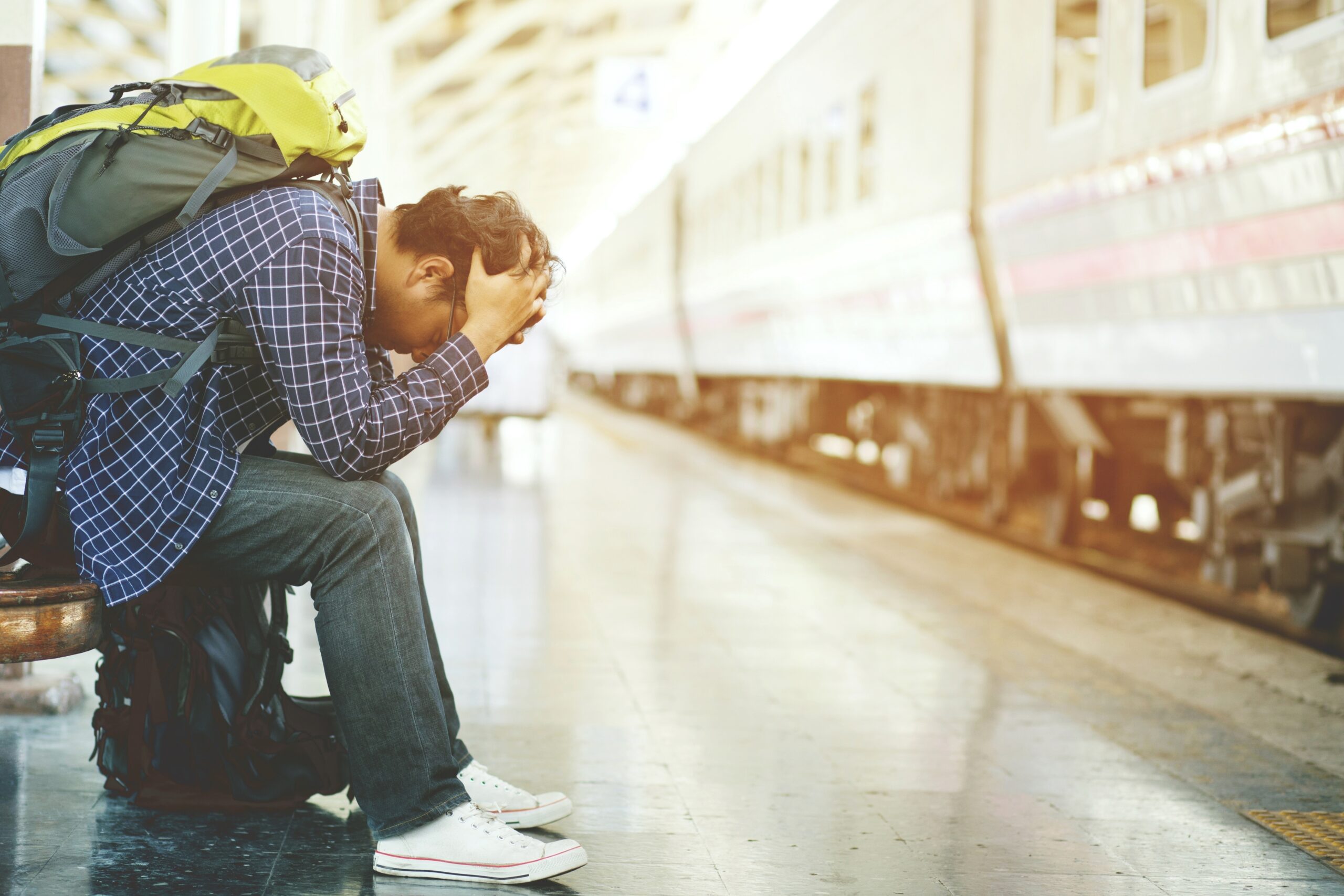
A GOOGLE search for “post-departure anxiety” won’t find anything, but that doesn’t mean this phenomenon isn’t running rampant in the travel industry at the moment. Although she would distance herself from having coined the phrase, it was first described to me by Crooked Compass founder & Chief Executive Officer Lisa Pagotto.
“It’s this level of anxiety that didn’t exist before,” she explained. “When a tour departs, you’re on edge, waiting for something to go wrong.”
While the travel industry has very much recovered from the COVID-19 pandemic from a passenger and revenue standpoint, the product offered by tour operators across the world may still be struggling. Combine this with the sky-high expectations of travellers, who are often paying far more than they did pre-pandemic, and a recipe for this novel post-departure anxiety is served.
“There’s this expectation that travel is back, and it’s fantastic because the tourism story is building, but from a tour operator perspective, we’re still very much in recovery mode, and trying to manage expectations as much as possible,” Pagotto added.
This phenomenon is not limited to the touring sector, either. The entire travel industry is trying to deal with changed traveller expectations, particularly those on the front line, who find themselves on the receiving end of shorter-than-usual passenger fuses.
“After speaking to our team, we have found an increase in anxiety both prior to travel and soon after departure,” added Julie Moran-Bunnik, who serves the Customer Care Team for Bunnik Tours. “We’re noticing an elevated emotional response from passengers when arrangements change unexpectedly.”
Missed transfers or hotel changes can be especially worrisome for solo travellers, Moran-Bunnik added, particularly for those travelling for the first or second time since the pandemic – those controversially referred to by former Qantas Airways Chief Executive Officer Alan Joyce as not “match fit”.
Pride in one’s work has meant this particular problem has gone unspoken about for some time. Lisa Pagotto could have been forgiven for thinking it was just her who is being impacted this problem.
The Crooked Compass founder deals with some of the least-developed tourism industries in the world, and shortly after the pandemic, identified her reduced capacity for the high quality product she was sending travellers on before pre-COVID.
However, through conversations with other members of the travel industry – on the touring, supply side, and agency sides – she realised just how many were suffering in silence, embarrassed their product is not what it was before.
“In particular, I’ve gone to smaller boutique operators who don’t necessarily have the big support of large teams and HR,” Pagotto explained. “Even speaking to some of the more medium to large operators, people who are in those more senior positions, and directors of significant companies, saying, ‘oh my God, yes’. It was very eye-opening.”
The root of the problem, according to Council of Australian Tour Operators (CATO) Managing Director Brett Jardine, is the dearth of talent which has been scourging the industry since it first emerged from the pandemic.
“Tour operators face the challenge of reinvesting in staff and marketing, which has been challenging with the cash lag that exists between booking and travel,” he explained. “For many, balancing business needs with customer expectations has required adapting to reduced resources, especially in workforce availability.”
Jardine said this problem is particularly prevalent overseas, in less developed destinations, where it can affect a multitude of traveller touchpoints, from local guides through to hotel services.
“It’s important to remember that while Australia’s travel industry was well-supported by government during COVID, other countries weren’t as fortunate,” he explained. “This has created a global shortage of skilled tourism workers, which can sometimes impact travellers’ experiences.”
Pagotto is particularly aware of this fact. Dealing almost exclusively with frontier destinations, she tells a story of a recent client travelling to one of the world’s least-developed nations, who was disappointed by the quality of the hotel room.
The reason for the unrenovated room, Pagotto explained, is that the owner of the hotel had died during the pandemic – a tragic problem, invisible to most, which no-one can be expected to solve.
The problems are not just external, Pagotto insisted, as she has faced the same difficulties recruiting talent and staff like all other sectors. She has even taken on a trainee for the first time.
This talent deficit, combined with the highly fertile demand environment, has the industry working harder than ever before – even during the pandemic.
“I think everybody is incredibly overworked at the moment…a big part of it is people running on empty,” Pagotto explained. “There’s an emotional reaction when you’re exhausted that’s not necessarily always rational, and that’s across the board…we’re all in that position.
When Pagotto started engaging with the rest of the the industry about the problems she was witnessing with her own product, she realised just how broadly spread the difficulties were – and how much reaching out helped.
“[It was] very refreshing not to still feel alone, but also very alarming that there are so many of us going through this, and no-one’s felt confident [enough] to talk to anybody else about it,” she added.
This contrasts with habits formed during the pandemic, when the travel industry was at its most collegial and supportive.
“One thing that was really positive out of that was everybody did band together, and everybody did support each other,” Pagotto added. “Now it’s every man for themselves.
“It’s kind of gone from this incredible supportive network of everybody’s understanding that we’re all struggling, no matter which part of the sector we’re from, to being really segmented, and everybody’s looking to point a finger because nobody wants to take the responsibility.”
Through her own experience with the problem, Pagotto is urging the industry to open up to their colleagues and friends, who themselves may be waiting for someone to reach out to them.
“There will be certain people who are keen to engage in how can we support each other, and who really have that supportive network mentality,” she said. “Everybody’s going through the same thing….it is actually okay, and if no-one’s going to talk about it, nothing’s going to get fixed.”
Conversations like these foster positive change, and help those mired in this confronting situation to handle the issues.
“Controlling the controllables” is key to coping with the problem, Pagtto believes, as is learning from each negative experience: could the customer have been better communicated with, or is there a common thread among the problems?
CATO, which now runs its own Academy, is on the front line of ensuring the sector is as skilled up as it needs to be, to ensure the traveller experience is just as brilliant now as it was pre-pandemic.
Jardine also points out the key value CATO provides to its accredited businesses outside of its Academy.
“CATO members are a vital resource for travel agents and travellers, offering well-established relationships with global suppliers and destination management companies,” he explained. “These partnerships allow Australian-based tour operators to conduct thorough due diligence, ensuring a dependable and high-quality experience abroad.”
These thoughts were echoed by one travel agency owner-manager, who provided a frank assessment of the situation.
“The way we are combating this and reducing post-departure anxiety is to align ourselves with reputable suppliers,” said the owner-manager. “Don’t let clients bully us into booking things online with no commission, or find ourselves charging a measly service fee ‘just to cover costs’ as that means we have no support if something goes wrong.”
Short of encouraging the industry to “bunker down”, problems like these can often seem as if there is no end in sight. This makes it all the more important the industry is just as supportive now as it was during the pandemic.
“The expectations around travel is that it should be how it used to be, and in some places it is, but in some places, it’s going to take a bit to take a bit longer,” Pagotto added.
