


WHILE news of Virgin Australia switching teams for a major rival must have come as a hefty body blow, Etihad gathered itself this week to assert its ongoing commitment to the Australian market.
The Middle Eastern carrier confirmed it will conclude its unilateral codeshare and bilateral frequent flyer partnership with Virgin Australia from 01 June next year, interestingly, a move made ahead of a decision by the ACCC and Foreign Investment Review Board to approve a proposed 25% stake by Qatar Airways in Australia’s second-largest airline.
When the termination takes effect, passengers will no longer
be able to book Virgin Australia-operated flights through Etihad’s booking channels, however, for customers with existing bookings that include a VA-operated segment, Etihad has assured there will be no changes to itineraries.
Speculation in the industry is rife that Etihad’s move is a precursor to Federal Government approval of the VA-QR deal, especially in light of the Aussie carrier last month requesting an expedited decision so that it can be ready to launch flights to Doha by June 2025.
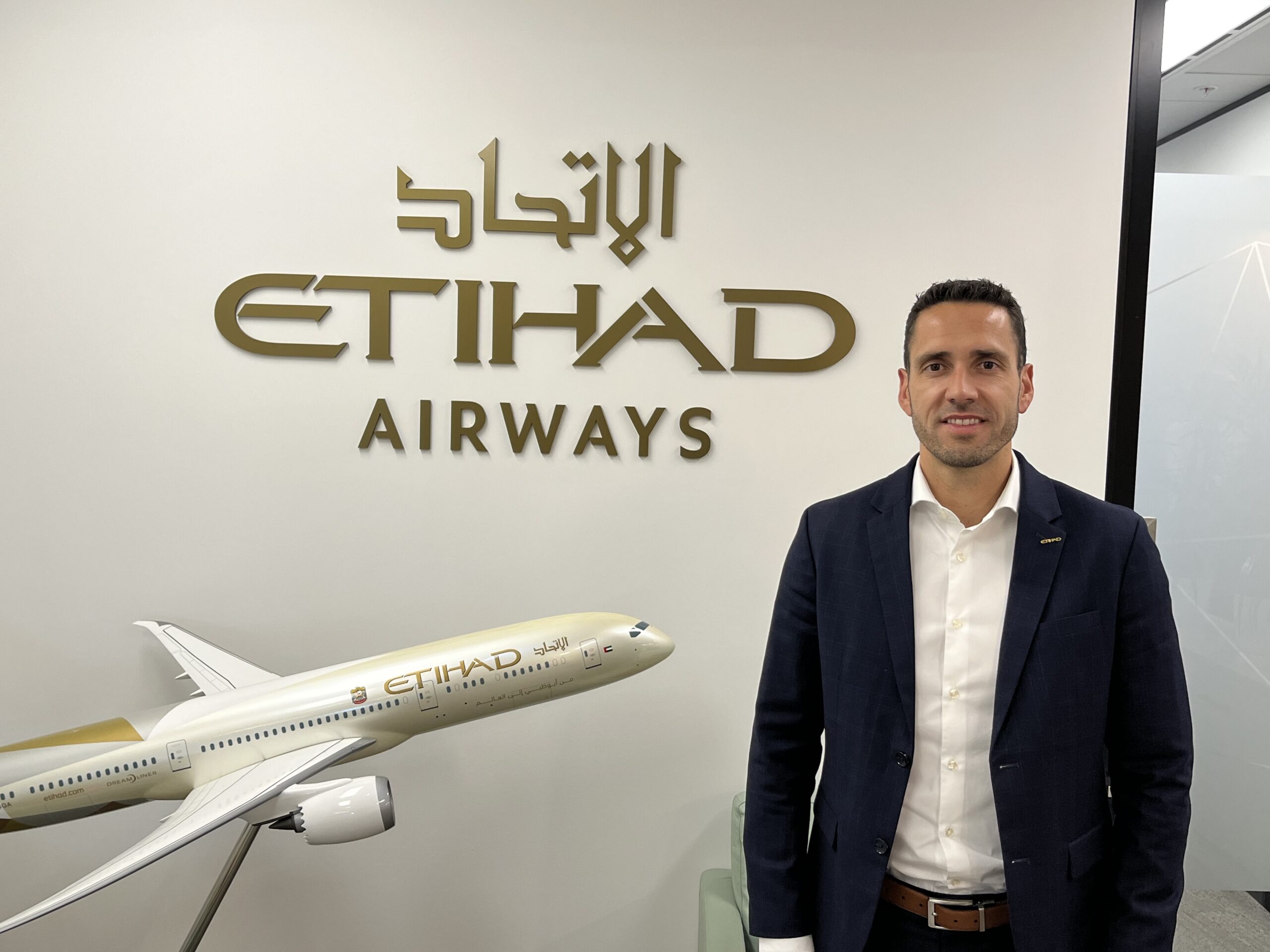
Sitting down with TB this week, Etihad Global Vice President of Sales and Distribution, Javier Alija, said the carrier had seen VA’s decision to part ways coming “for quite some time”, adding it was “unfortunate” but that it understood VA’s need to realign its business for shareholders.
“VA is making a strategic decision when it comes to their shareholders, and from a business perspective it doesn’t go well with the relationship we have had up until now,” Alija explained.
“But we now want to focus on ourselves and what we can offer to the Australian public and this is not going to be the only country in our network where we successfully operate without a very strong partner,” he added.
While Alija was keen to talk up Etihad’s future growth strategy in Australia, he conceded the airline was happy with its previous strategic arrangement with VA.
“We are very honest about this, this is not a decision we would have taken otherwise,” he said.
“We’ve had a long-standing partnership for 15 years, across codeshares and frequent flyers, we have always worked very well with the Virgin Australia team.
“Even in the past, they’ve operated to Abu Dhabi and they helped us readjust some of the domestic networks so that connectivity was protected – so we had a great relationship with them but this is business and it’s unavoidable.”
Looking forward to a future without a key partner in Australia, Alija said in a crucial way it was beneficial the Virgin Australia break-up happened in 2024 and not a time in its past where Etihad was less financially stable.
“The best thing we can do for the Australian market is to be in a strong and healthy financial position,” he said.
“This hasn’t always been the case, back in the day when the relationship with Virgin was different and when we even had a bigger presence in the market, we were not a financially healthy company.
“But that has changed, and we’ve gone through significant readjustment and a very significant turnaround and that’s probably our single-most important value proposition – we are a financially sustainable airline.”
The other key strategic pillar in Australia for Etihad will be growing its schedule of services in the local market.
“We need to also be able to offer our passengers in Sydney and Melbourne at least two departure times which also improves the connectivity in Abu Dhabi,” Alija said.
In order to build back Australia in a profitable manner, Etihad has sought to shore up its network in other key regions such as Europe and neighboring Gulf nations, so that Aussies have a strong network for onward connections.
“Now that we have grown to a pretty decent level and we have most of our European services at double daily or more, we are now in a position to grow the Australian side of the equation,” Alija explained.
“Financially speaking, this is where most of the risk is, there’s less risk in doubling up in Europe versus doubling up in Australia…so we’re executing on that plan carefully.”
Commenting on its current market position in Australia, Alija said it will be looking to grow its slice of the pie as much as the carrier can within the limitations of aircraft availability.
“[Over the next two years], we will be doubling the two gateways that we currently operate to [Sydney and Melbourne], and we’re going to be looking at expanding into others,” he confirmed.
“I think between the second half of 2025 and the beginning of 2026, that’s where we will have more news for the Australian network,” Alija added.
Demonstrating its willingness to shore up local goodwill and commit to the trade, Alija also revealed Etihad will extend its stopover program in Abu Dhabi to travel advisors for
the first time.
The decision to include the trade is unique to Australia and is driven by a need to give Aussies a smoother end-to-end experience.
“We recognise that these are challenging times and this is not something we intended to do initially, but is a result of a change in strategy from Virgin Australia.
“That’s why the business very quickly came together and were keen to say, ‘let’s consider an exception for Australia’, and the market is a natural market for stopovers,” Alija said.
Etihad relaunched its stopover program in May, offering travellers the option of booking a free hotel stay as part of the flight booking.
However, many of our readers at the time expressed discontent with the decision to make the program only available through direct bookings on EY’s website.
Alija added the reversal in thinking was also fuelled by a strategy to build greater loyalty in the Australian market.
“Breaking your journey up in Abu Dhabi is a fantastic way to discover Abu Dhabi…that’s what we’re banking on and we’re
happy to invest in [Australia].”
More formal information will be delivered to the trade later this week, with a rough launch date of 25 Nov in play.
