


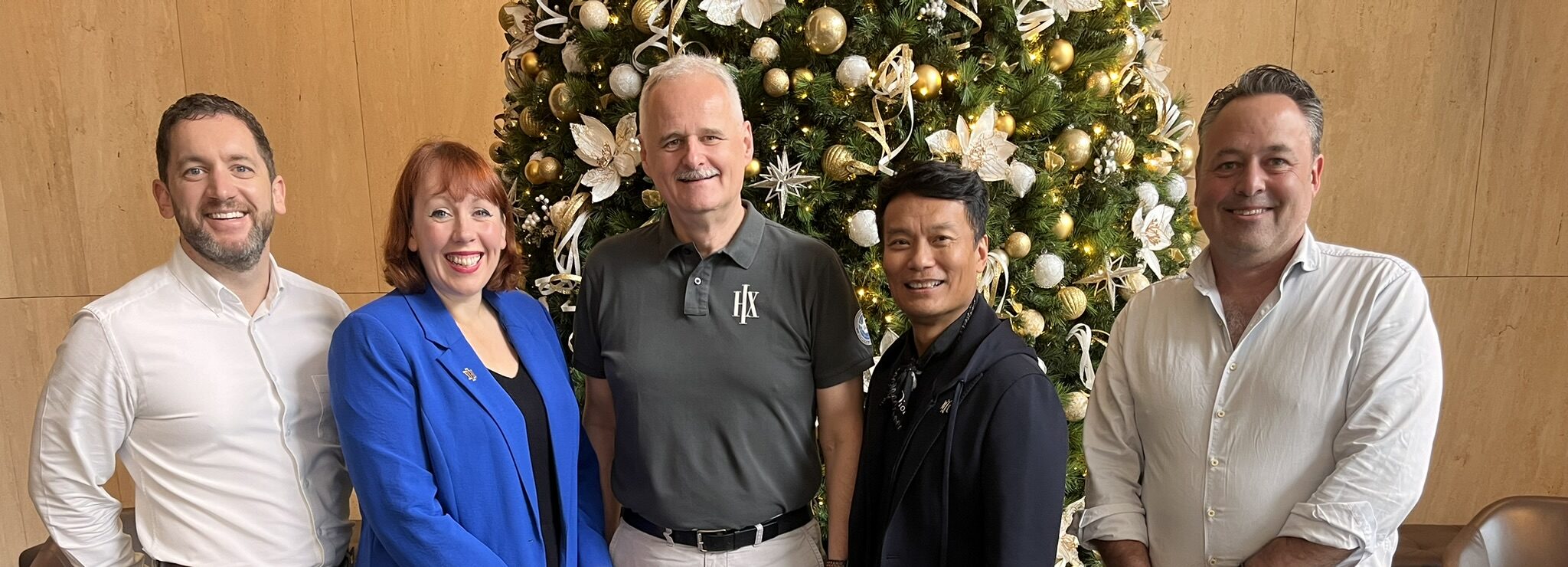
HX is looking to visit more warm water destinations – which could include Australia – in the medium-term future, as it looks to diversify its product offering, Chief Executive Officer Gebhard Rainer has told travelBulletin.
The newly appointed HX chief sees the potential for expansion in the expedition sector in warm water destinations, such as its highly successful Galapagos product.
Asked whether Australia could factor into this mix, Rainer said he would “never say never”, adding Pacific destinations, as well as those in South Asia, are well within HX’s considerations.
“The Pacific region is very interesting, because you have islands that are unexplored, and very undeveloped, similar to what Greenland is.
“There is an opportunity [in Australia], and I think specifically what we are going to do with the University of Tasmania will tie us more to this hemisphere,” Rainer said.
“I think at some point, definitely, as we explore what the opportunity might be…I am convinced that once we get into ’26 that conversation, together with the conversation of expanding the fleet, is going to be very important.”
Rainer emphasised Pacific destinations are also a match for the HX Foundation – a significant consideration for the cruise line, as it scouts new parts of the globe to visit.
“You have communities where you have indigenous islanders there who need help from an economic point of view,” he said.
“The combination of what we do, together with our Foundation, serve a really perfect way of getting in there, exploring it from an expedition point of view, and at the same time helping those communities.”
Rainer clarified any expansion would be carried out in a considered manner, to ensure ‘expedition’ rather than ‘tourism’ remains at the heart of the cruise line’s proposition.
“I think the opportunity is plentiful, as long as it’s done mindfully, and as long as the true meaning of ‘expedition’ is not being abused,” he said.
“It has to be done mindfully, because you could easily get into just tourist destinations…we need to be very careful as to how we continue that explorer spirit.
“There are so many destinations, sea and land, that we can combine, and I think that’s the other opportunity we have going into the future.”
The expansion of HX’s fleet is also on Rainer’s radar, with a wide range of factors to influence what its next generation of ships looks like.
HX’s present focus is on its current fleet, as it awaits further context about the needs of its future cohort of ships – which will come into focus closer to 2026, Rainer added.
“We’re very focused on our existing fleet and what’s going to happen in the future in terms of the development,” he said.
“By ’26, hopefully we will have clearer sight as to what makes sense, what is available and what is sustainable going forward.”
“We need to be able to maintain that technology and then go into the next generation of shipbuilding,” he added.
Rainer said HX is taking particular interest in future propulsion, particularly as its sister brand Hurtigruten forges ahead with its carbon-neutral Sea Zero Project.
Contemporary technology such as hybrid ships will not necessarily be the best solution of the future, Rainer added.
“In our case, it’s [about] watching technological development very carefully as to what the future propulsion is going to be for us,” he explained.
“There are others who are betting on LNG; I am not a big fan of LNG because it creates methane [which is] very bad for the environment…it’s not being talked about, but it should be.”
Rainer said adjustments to a ship’s hull design, to allow her to cut down on fuel consumption, will likely be of importance.
Practical solutions such as better voyage planning, are also pragmatic, present-day solutions.
Rainer believes HX has topped out with its largest ships, which at a capacity of just under 500, are unlikely to be eclipsed by future builds.
He said HX has reached this size in order to satisfy its “relaxed luxury” positioning, but that future restrictions will likely force vessels down in scale.
“I think it’s going to tighten from a regulatory perspective, as to what you can do, how many landings you can have, how many people you can actually take on land at one go,” he pondered.
